Expat Savings Accounts: Offshore, Onshore or at Home?
Researched and drafted with AI assistance from published sources; published by NorwegianSpark SA, founded by Thomas Lovas Lokoy
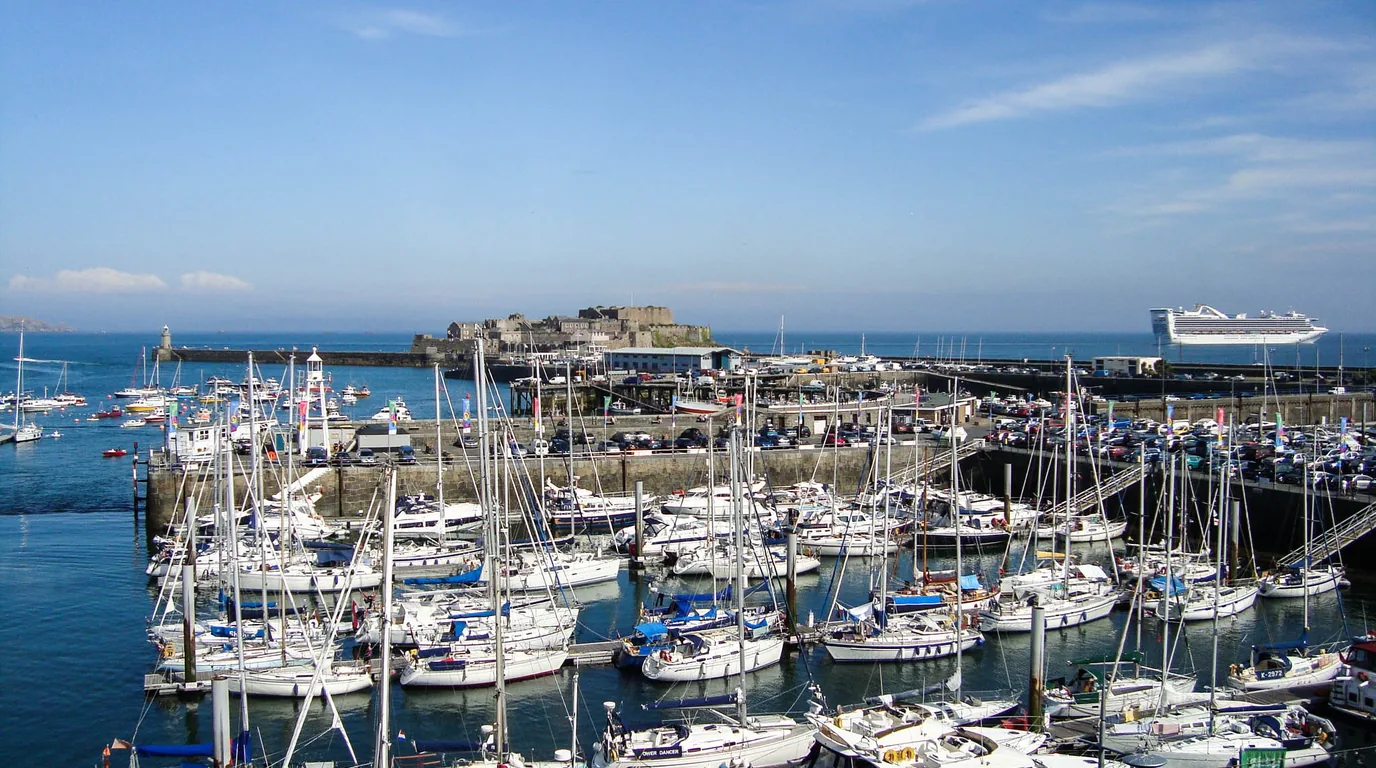
The best expat savings account is usually not one product but a decision about where your savings should live: in a bank in the country where you now live, in your home country, or offshore in a place such as Jersey, Guernsey or the Isle of Man. The choice decides which deposit protection scheme covers you, how much it covers, and which country taxes the interest. Offshore expat banking is a real option, but the protection is lower than many people assume: the Jersey, Guernsey and Isle of Man schemes each cover up to GBP 50,000 per person on their own terms, against GBP 120,000 under the UK's FSCS and EUR 100,000 in the EU. This guide compares the three homes for your savings, with every limit taken from the scheme's own published page, so you can choose deliberately rather than by default.
The Three Places Expat Savings Can Live
| Where the savings sit | Typical protection | Who it suits | Main catch |
|---|---|---|---|
| A bank in your new country of residence | That country's scheme, for example EUR 100,000 per depositor in the EU or at least USD 250,000 at each FDIC-insured US bank | People settled for several years who earn and spend locally | Rates, currency and tax are all local, and you may move again |
| A bank in your home country | The home scheme, for example GBP 120,000 under the FSCS | People who expect to return, or who have income and bills at home | The bank may restrict or close accounts for non-residents |
| An offshore bank in Jersey, Guernsey or the Isle of Man | The island's own scheme, up to GBP 50,000 per person on that scheme's terms | People who move between countries and want one relationship bank | Lower protection than the UK, entry thresholds, and the interest is still taxable where you live |
Many expats use more than one. A common pattern is an emergency fund in the country you live in, longer-term savings where you expect to retire, and a multi-currency account for moving money between them.
Offshore Expat Savings: What the Island Schemes Actually Cover
"Offshore" in expat banking usually means one of the three Crown Dependencies. Each runs its own depositor compensation scheme, and none of them is the UK's FSCS, even when the bank carries a famous UK brand. Here is what each scheme publishes about itself.
| Scheme | Limit for individuals | How the limit applies | Other published terms |
|---|---|---|---|
| Jersey Bank Depositors Compensation Scheme | GBP 50,000 | "per eligible depositor, per Jersey banking group" | Aims to send compensation within 7 working days of a bank failing; payouts can be reduced if the scheme lacks funding |
| Guernsey Banking Deposit Compensation Scheme | GBP 50,000 | "per qualifying depositer in respect of that bank" | Aims to pay within three months; total compensation "capped at £100 million in any 5 year period" |
| Isle of Man Depositors' Compensation Scheme | GBP 50,000 | Per person per covered bank | Covers only Class 1(1) licensed deposit takers; GBP 20,000 for companies, trusts and charities |
Sources: JRDCA, the Jersey scheme; Guernsey DCS, about the scheme; Isle of Man FSA, depositors' compensation scheme. All read 12 November 2026.
Three details in that table matter more than the headline GBP 50,000.
Jersey counts by banking group. If two brands belong to the same Jersey banking group, your deposits with both share one GBP 50,000 limit. Splitting money between them does not double your cover.
Guernsey has an overall cap. The scheme's total payout is capped at GBP 100 million in any five-year period. If a large bank failed and claims exceeded that, the Guernsey scheme says payments would be reduced proportionally. HSBC Expat's own page describes the Jersey scheme's total compensation as capped at GBP 100,000,000 in any five-year period too.
The Isle of Man only covers certain licences. The Isle of Man FSA says its scheme "does NOT protect customers of Class 1(2) or Class 1(3) deposit takers". Before you deposit, check which class of licence the bank holds.
Compare that with the UK: the Bank of England says FSCS protection rose from GBP 85,000 to GBP 120,000 on 1 December 2025, for UK banks authorised by the PRA (Bank of England: what is the FSCS?). The island schemes are separate from the FSCS, and which scheme covers an account depends on the licence and location of the bank that holds it, not on the brand. If it matters for your balance, ask the bank in writing which scheme covers your specific account.
A Real Example: HSBC Expat
HSBC Expat is an offshore expat account from a large bank, so it shows how the model works. On its own page, read 12 November 2026:
- HSBC Expat "is a division of HSBC Bank plc, Jersey Branch".
- To be eligible you must be over 18, live in an eligible country, and either save or invest at least GBP 75,000 (or currency equivalent) within three months, have a salary of at least GBP 120,000 paid into the account, or already be an HSBC Premier customer in another country.
- There is no monthly fee while you meet the eligibility criteria; if you stop meeting them, you "may be charged an underfunding fee".
- Eligible deposits are covered by the Jersey Bank Depositors Compensation Scheme up to GBP 50,000.
Source: HSBC Expat. One point to note: the same page's FAQ also mentions FSCS cover, which conflicts with its own Jersey scheme wording. Because the account is held at the Jersey branch, the Jersey scheme is the one its own deposit section names. If the difference matters for your balance, ask HSBC in writing which scheme covers your specific account.
The pattern holds for other offshore banks: the brand may be British, but the licence, the scheme and the limit belong to the island. Check the legal entity named in the account terms, then look that entity up on the island regulator's register.
Onshore in Your New Country
If you have settled somewhere and expect to stay, a savings account at a local bank is often the simplest choice. Your savings are in the currency you spend, covered by the local scheme, and taxed in one place.
The EU sets a common floor: Directive 2014/49/EU requires that "the coverage level for the aggregate deposits of each depositor is EUR 100 000" (Directive 2014/49/EU). In the US, the FDIC says deposits are "automatically insured to at least $250,000 at each FDIC-insured bank" (FDIC: deposit insurance). Elsewhere, limits and currency rules vary a great deal, and some schemes do not cover foreign-currency deposits at all. Our guide on how to protect your money while banking overseas has a table of limits and currency rules by scheme, and deposit insurance by country explains how to check any bank's licence.
The catch with onshore savings is mobility. If you move again in three years, you will have to close or run the account from a third country, and the bank may not want a non-resident customer either.
Keeping Savings in Your Home Country
Keeping savings at home is attractive if you expect to return: the protection is familiar and the account is already open. But two things change once you become non-resident.
First, your bank may not let you keep the account. Some UK providers ask you to close accounts when you leave permanently. Our guide to keeping your UK bank account when you move abroad sets out what two banks say and the 2026 notice rules.
Second, tax-free wrappers usually freeze. For UK savers, GOV.UK says you can keep an ISA after moving abroad and keep the UK tax relief on what is already in it, but "you cannot put money into it" while you are non-UK resident, unless you are a Crown employee working overseas or their spouse or civil partner (GOV.UK: ISAs if you move abroad).
Tax: Offshore Does Not Mean Tax-Free
A common misunderstanding about offshore savings is that interest earned offshore is not taxed. Where you are tax resident usually decides where the interest is taxed, wherever the bank is.
- Reporting is automatic. Under the Common Reporting Standard, banks in participating jurisdictions identify the country where each customer is tax resident and report the account so that country's tax authority receives it. Our guide to what your foreign bank reports about you explains what is sent.
- Your home country may still tax home-country interest. For the UK, GOV.UK says people who live abroad usually need a Self Assessment return if they have taxable savings interest from UK banks or building societies, and that a double taxation agreement can give relief so you are not taxed twice (GOV.UK: tax on your UK income if you live abroad).
- US persons are reported everywhere. If you are a US citizen or green-card holder, FATCA adds its own reporting and makes many foreign banks cautious; see FATCA and the US person problem.
Before you open any savings account abroad, ask a tax adviser who knows both countries how its interest will be taxed.
Currency: Save in the Currency You Will Spend
The protection limit is only half the risk. If you save in pounds but plan to retire in euros, a move in the exchange rate can cost more than any difference in interest rate. A simple rule:
- Hold short-term savings in the currency of your day-to-day spending.
- Hold long-term savings in the currency of your expected future spending, often where you plan to retire.
- Convert in planned, larger amounts rather than letting each payment convert automatically at a marked-up rate.
Multi-currency accounts are useful for holding and converting, but many are e-money accounts. E-money is safeguarded rather than covered by a deposit scheme, so it is better suited to moving money than to storing a life's savings. Our guide on whether your money is safe in a neobank explains the difference.
How to Choose: Five Questions
- How long will you stay? Under three years, keep savings mobile: home country or offshore. Settled for longer, a local bank is usually simplest.
- How much are you saving? Above a scheme's limit, split balances across banks with separate licences, and for Jersey across separate banking groups.
- Where will you spend the money? Save in that currency, or plan when you will convert.
- Can you meet the entry rules? Offshore expat accounts often need a minimum balance or income, as HSBC Expat's GBP 75,000 or GBP 120,000 thresholds show.
- How will the interest be taxed? Get the answer for both your country of residence and the country of the bank before you choose.
Frequently Asked Questions
What is the best savings account for expats?
There is no single best account. Settled expats often save with a local bank covered by their new country's scheme, while people who move often may prefer an offshore bank in Jersey, Guernsey or the Isle of Man, or keep savings in their home country if the bank allows it.
Are offshore savings accounts protected?
Yes, but by island schemes with lower limits than the UK: up to GBP 50,000 per person in Jersey (per banking group), Guernsey (per bank, within a GBP 100 million cap over five years) and the Isle of Man (per covered bank, Class 1(1) licences only). These schemes are separate from the UK's FSCS, so confirm in writing which scheme covers your account.
Is interest on offshore savings tax-free?
No. Interest is usually taxable in the country where you are tax resident, and offshore banks report accounts under the Common Reporting Standard. Home-country rules may also apply; for example, GOV.UK says people abroad usually need a Self Assessment return for taxable UK savings interest.
Can I keep my ISA if I move abroad?
Yes, and it keeps its UK tax relief, but you cannot pay new money in while you are non-UK resident, unless you are a Crown employee working overseas or their spouse or civil partner.
What do I need to open an HSBC Expat account?
According to HSBC's page, you must be over 18, live in an eligible country, and either save or invest at least GBP 75,000 within three months, have a salary of at least GBP 120,000 paid in, or be an HSBC Premier customer elsewhere.
Should I keep my savings in a multi-currency app?
For moving and converting money, yes. For long-term savings, check whether the provider is a bank or an e-money institution: e-money is safeguarded, not covered by a deposit guarantee scheme.
This is general information, not financial, tax or legal advice. Scheme limits, eligibility and bank terms change; confirm each figure with the scheme and the bank, and get tax advice that covers both your country of residence and the country of the account.
Sources
- JRDCA, the Jersey scheme (jrdca.org.je)
- Guernsey DCS, about the scheme (dcs.gg)
- Isle of Man FSA, depositors' compensation scheme (iomfsa.im)
- Bank of England: what is the FSCS? (bankofengland.co.uk)
- HSBC Expat (hsbc.co.uk)
- Directive 2014/49/EU (eur-lex.europa.eu)
- FDIC: deposit insurance (fdic.gov)
- GOV.UK: ISAs if you move abroad (gov.uk)
- GOV.UK: tax on your UK income if you live abroad (gov.uk)
Sponsored partners

Affiliate disclosure: Links above are affiliate links. We may earn a commission at no extra cost to you.